

How to Find Amazon Book Categories Most Authors Miss
You spent months writing your book. You fixed the errors, chose a cover, and got it ready for sale. Now comes a big question. How
Finishing a manuscript feels like a huge win. However, the journey is not over yet.
Your manuscript still needs a bit of polish before readers view it. It might take editing, design, formatting and marketing. So, being aware of what’s coming up next helps you save time and avoid blunders.
This book publishing guide explains each key stage in simple steps. You will learn how to prepare your book and choose the right path.
If you want to know how to publish a book, start with one rule. Do not rush your manuscript into print.
Publishing becomes easier when you do it in the appropriate order. First, concentrate on the manuscript itself. Then, go to editing, design, formatting and publishing.
By taking things step by step, you can avoid making rash decisions and costly mistakes.
First, take a short break from your draft.
You may have spent months writing it. So, some problems may now be hard to see.
After a short break, return with fresh eyes. Then, read the book like a reader. Look for sections that repeat, slow parts and unclear sections.
For fiction, look at the storyline, pacing, and characters. Make each scene advance the tale, as well.
For nonfiction, consider what each chapter is for. Clarify the advice and make it actionable.
Then cut whatever your readers don’t need. Tighten up extended passages; repair weak ties between ideas.
But don’t worry about every comma yet. The bigger picture is more important right now.
A thorough revision affords a better launch point for the book publishing process.
Next, have another person review your work.
A skilled editor can spot problems you may miss. Also, each type of editing has a different purpose.
Not every book needs every type of editing. Still, your manuscript should get the help it needs.
Poor editing can make a good book hard to enjoy. As a result, readers may lose trust in the work.
So, make editing a real part of your publishing plan.
Make sure your draft is clear and polished before design begins
Pick the course that matches your objectives.
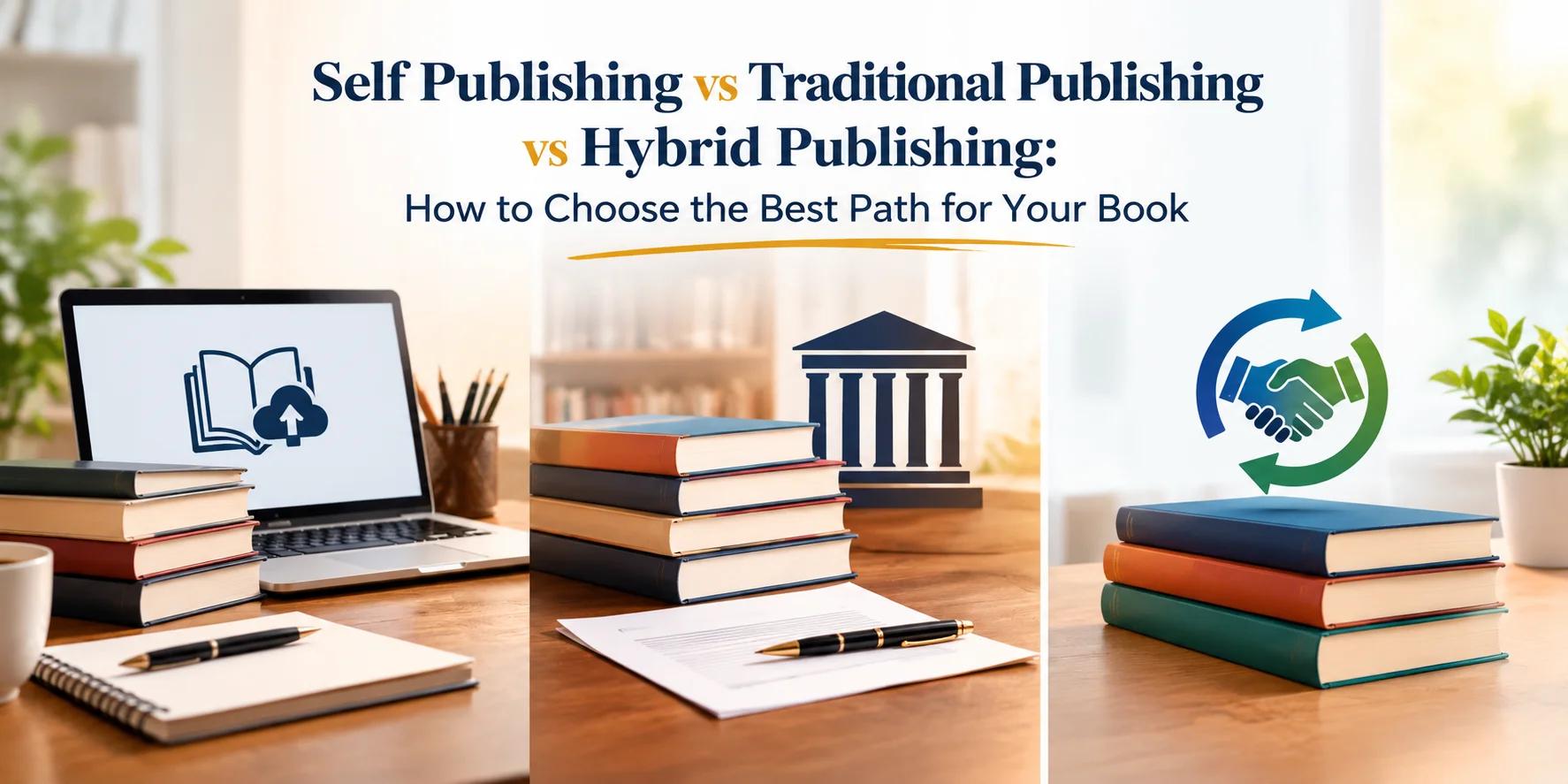
Most authors think in terms of traditional publication, self-publishing or assisted publishing.
|
Publication pathway
|
Good for
|
Author Control
|
Speed of Publication |
|
Traditional Publishing |
Publisher-Backed Path |
Down |
Is slower often |
|
Self-Publish |
Creative control |
High |
Usually quicker |
|
Backed Publishing |
Expert Advice |
Moderate to high |
Often quicker |
There are agents and publishers in traditional publishing. So it can take a little extra time.
You have more control in self-publishing. But you’re also doing more of the job yourself.
Supported publication guides you through the essential phases. Therefore it can serve authors who need expert guidance.
Choose with your budget and goals in mind. And assess how much you want to control.
These selections are important when you learn how to get a book published.
After editing, your manuscript needs a professional look.
First, look at the cover.
The cover is usually the first thing readers see. So it should give you the tone and genre of the book fast.
Don’t mess up the style. Also, use type that readers can see easily.
For print books, cover size depends on the final page count. Therefore, finish the inside pages before the final cover file.
Next, format the interior.
A basic Word file is not always ready for print.
Print books need clean margins and page numbers. They also need clear chapter starts and even spacing.
Meanwhile, ebooks need a flexible layout. Readers may change the text size or screen view.
Also, check every image before you publish.
Good design should make reading easy. It should never distract from the book.
Get to the important publishing facts.
An ISBN identifies a book and its format. So, different formats can require distinct ISBNs.
For instance, a paperback and a hardcover could have different numbers.
But ISBNs have different rules for different countries. Check with your local ISBN agency before you make up your mind.
Copyright is another matter.
Once created, your original work may be protected by copyright. But elsewhere in the world, you might have more legal standing if you register formally.
So check the official copyright rules in your country.
And protect your records.
Save your finished text, contracts, picture rights and licenses. Also, save copies of any publishing agreements.
Good records can aid you later on.
These responsibilities are part of the vital book publishing process for authors.
Then, make ready the details to describe your book.
This information is called metadata.
These may include:
First of all, get all the facts straight.
Then write a clear book description. Set expectations for readers.
Also, select categories that best describe your book.
The improper category will put your book next to books that don’t belong. So the correct readers may not locate it.
Keywords can help with discovery, too. But use them only when they make sense.
Do not duplicate words just for search engines.
People first. Write for people.
This is good metadata, which helps readers understand your book before they buy it.
Now, decide where your book will be sold. Some authors focus on online stores. Others want bookstores and libraries too.
So, start with your target reader.
Where do they usually buy books?
If your readers prefer digital books, ebook stores may be enough at first. Meanwhile, print authors may want wider sales options.
Next, choose your book formats.
You may publish as:
However, you do not need every format on day one. Begin with the formats that work with your readers and your budget.
You can add more options later on.
The book publishing process becomes easier to handle with a clear distribution plan.
Pick the formats and sales channels that make sense for your readers
Before release, check a printed proof if you can.
A book can look different on paper. So, do not rely only on your screen.
First, inspect the cover.
Check the title, spine, back cover, and edges. Then turn to the interior pages.
Check the margins and page numbers. Also check the pictures, spacing and chapter openings. Then look for odd line breaks or blank pages.
Paper can also make small errors easier to spot. Therefore, read key pages one more time.
If you find a problem, fix it before launch.
A final proof may take extra time. Still, it can protect the reader’s first impression.
Don’t wait for launch day to mention your book, but build interest early.
First, make a simple author page or book page. And then, offer helpful updates with your audience.
What you might share:
Think about advance readers, too.
Feedback can be provided by early readers. They can also help generate early word of mouth.
But don’t go posting everywhere without a plan.
Finally, your book is ready to meet readers.
It’s launch day excitement. But that should not be the end of your work.
Continue promoting the book through relevant channels after launch.
For example, contact critics or go on interviews. You can also attend events or write guest posts.
Then see what the readers do.
Reviews can tell us what readers like best. Also, sales can show which formats work well.
Use that information to shape future plans.
Some authors may also want expert help along the way. WestBow Publishers offers Author Publishing Services for key publishing stages.
That support can make the process easier to manage. Meanwhile, authors can stay focused on their writing and readers.
Finishing your manuscript is a major step. However, a finished draft is not yet a finished book.
First comes revision and editing.
Next comes design, formatting and metadata.
Then, you need distribution, proofing and marketing.
Following these stages in order can make the process much easier. More importantly, it can help you avoid costly mistakes.
This book publishing guide gives you a clear road from manuscript to publication.
You also do not need to manage every stage alone.
WestBow Publishers can help you turn your finished manuscript into a professional book. The goal is simple: make the publishing journey clear and easier to manage.
Turn your finished manuscript into a professionally published book with expert support
Begin with revision and expert editing. Then have your cover, inside files, ISBN, metadata and distribution plan ready before you publish.
Professional editing helps with clarity, structure, grammar and consistency. It can give your book a more professional and credible look.
The timeframe is based on the editing, design, formatting, revisions and dissemination. It can require weeks or months of careful preparation.
Yes. A clear plan, expert preparation and the correct publishing support can make a first-time author a success.
Professional help can relieve technological errors and production stress. It also helps your book satisfy professional standards before it goes out to the reader.
Recent Posts
You spent months writing your book. You fixed the errors, chose a cover, and got it ready for sale. Now comes a big question. How

Writing a book is a process of time, heart and hard work. But writing your book is merely the beginning. Now you have to help
You have finished writing your book. Now comes a choice that could shape its future. Should you publish it yourself, find a publisher, or choose