

How to Find Amazon Book Categories Most Authors Miss
You spent months writing your book. You fixed the errors, chose a cover, and got it ready for sale. Now comes a big question. How
Writing the final line of a book can feel like a small miracle. You may have spent months working on it. In some cases, even years. Every scene, lesson, and memory took time to shape. Now, the draft is finally complete… one question still remains. How does it become a real book that readers can hold, buy, and enjoy?
A trusted book publishing service in the USA can help with that next step. The right team will not take the heart out of your work. Instead, it will help you clean the text, shape the cover, set each page, and place the book on the right sales sites. You should also know what is happening at every stage. After all, this is your story and your name.
Yet no two writers need the same path. Some want a large press to lead the way. Others want full control and a fast launch. Many writers want help, but they also want to keep their rights.
So, before you sign a deal, learn how each type of publishing works. This guide explains the main choices, the steps that bring a draft to life, and the key signs of a team that will treat your book with care from start onward.
There is no single best road. Your time, funds, goals, and need for control will guide your choice.
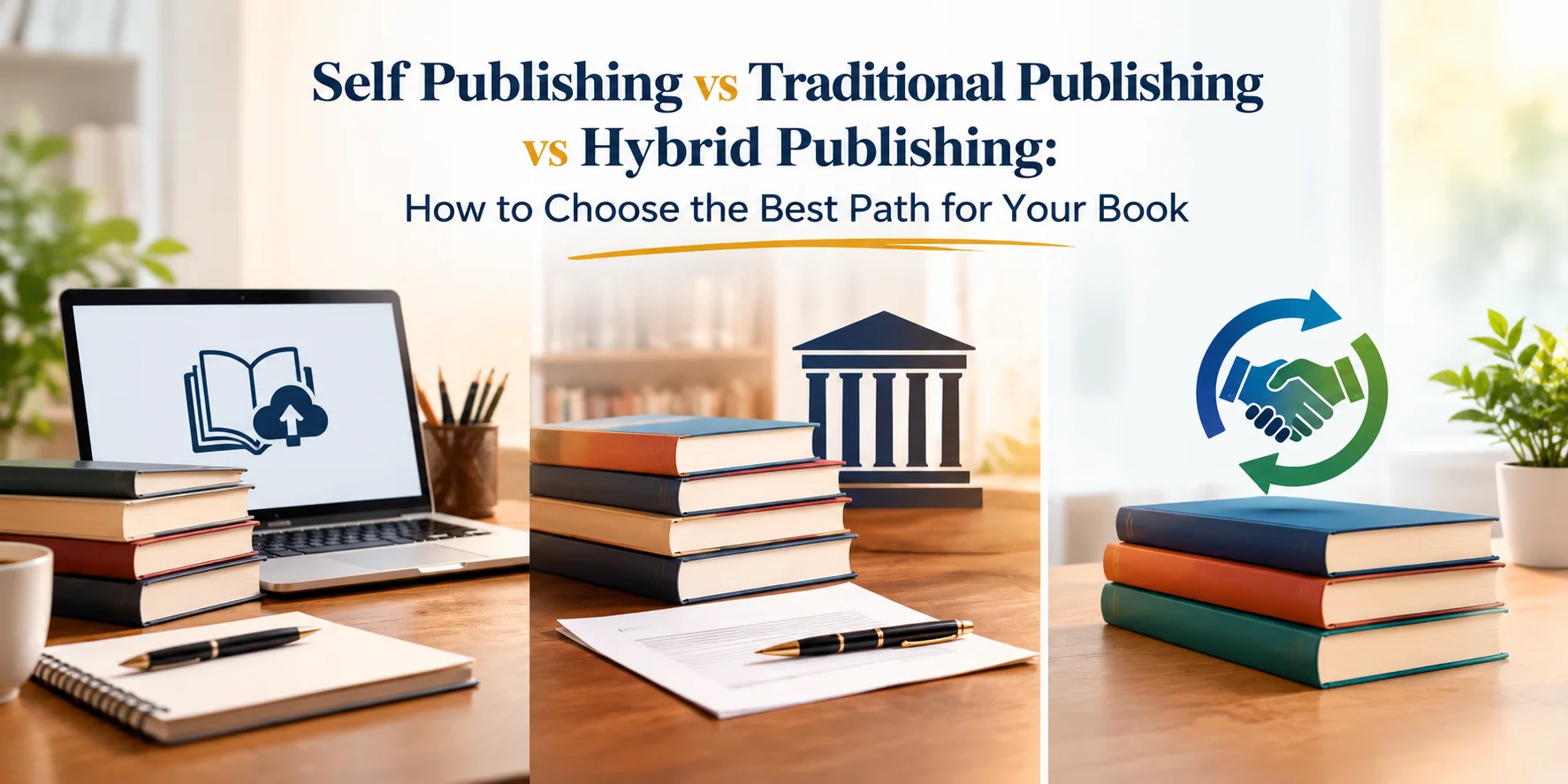
An author sends a draft to an agent or press. If accepted, the press may pay for editing, cover art, print, and sales work.
There are good trade connections along this trail. But it could be slow, and the author may have less control over the cover, price, or the date it will be released.
Authors can have greater freedom with self-publishing. The cover, price, sales sites, formats and release date are selected by you. You also keep your rights.
However, you must plan editing, design, file setup, and book ads. So, many writers hire a book publishing service in the USA for skilled help.
Hybrid publishing sits in the middle. The author often pays the costs, while the company handles editing, design, files, and sales setup.
This route offers help and control. Still, check the full cost, your rights, your share of sales, and each side’s duties before signing.
Once you pick a path, the book work starts. A team may provide:
The order matters. First, fix the words. Next, set the pages. Next, proofread the last file. This flow will reduce rework.
First, ask if the book has a clear purpose. Before designing, conduct a gap analysis, check for slow points, weak links, and repeated points.
Then, go with the major changes. Editing of the story enhances smoothness and clarity. A line edit clears each page. Last, a proofread catches small slips.
After the text is set, build the look. The cover should fit the genre and age group. The pages should feel clean and easy to read.
Now, view it as a buyer. Does it feel true to the book? Does it draw you in? Ask for changes before approval.
Then, make separate print and eBook files. Print needs the right size, space, trim, and image quality. eBooks need clean links and smooth page flow.
Also, order a print proof when possible. A screen can hide small faults in color or page cuts.
Finally, write the title, short text, author bio, search words, and book groups. They must be written with care, because these details help readers find and grasp the book.
Yet setup is only the start. Posts, emails, early reviews, talks, and local events can help. Slow, honest reach often beats loud claims.
A good team should make the path clear. Ask who will edit the book, how many changes you get, who owns the files, and what the fee covers.
A first talk can tell you whether the team values your voice or only wants the sale.
Also, avoid firms that promise sure sales or quick fame. Instead, look for fair terms, real samples, clear dates and kind answers.
All firms should earn trust through caring and results. Select those firms who listen first and switch the words.
A book may hold your past, your hope, your skill, or a world you built from nothing. So, take your time. Ask hard questions. Choose the path that guards your voice and gives your book a strong start.
It helps writers edit, design, format, print, list, and launch books while guiding them through key choices about files, rights, price, sales sites, reader reach, and clear long-term book goals.
The cost is dependent on book length, editing requirements, artwork, page layout, print type and sales objectives. Be careful with any publishing contract you sign in full.
Neither path is always better. Self-publishing provides quick and controlling; a traditional press provides trade support. The decision you make should be based on your goals, funds, time, rights and needs.
It's impossible to guarantee sales or bestseller status for any fair publisher. While quality can be elevated through good work, sales still depend on reader fit, reach, reviews, timing, price, trust and hard work.
The time is based on the draft and service plan. Proper editing, design, file work, proofreading and sales setup can take several weeks or even a few months.
Recent Posts
You spent months writing your book. You fixed the errors, chose a cover, and got it ready for sale. Now comes a big question. How

Writing a book is a process of time, heart and hard work. But writing your book is merely the beginning. Now you have to help
You have finished writing your book. Now comes a choice that could shape its future. Should you publish it yourself, find a publisher, or choose